Adolphe Sax’s 201st Birthday
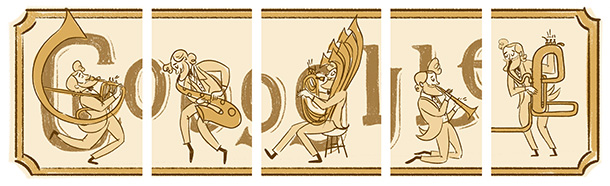
- If you were alive in the mid-nineteenth century and had a particularly keen ear for music, you might have noticed a void somewhere between the brass and woodwind sections. Adolphe Sax certainly did, and being both a talented musician and the enterprising man that he was, he started tinkering and endeavored to fill it. The result was the iconic, honey-toned instrument still bearing his name: the saxophone.The son of an instrument-maker, Sax was highly creative and had a deep understanding of brass and woodwinds. He started tinkering with instruments of his own, and upon bringing together the body of a brass and the mechanics of a woodwind created a hybrid that would revolutionize music. His eponymous saxophone had a sound all its own, a wonderfully smoky middle ground between the two.The Saxophones that were popularized by the likes of John Coltrane, Lisa Simpson, and Kenny G constitute only a fraction of his impressive body of work. From the whimsical looking 7-bell trombone to the large and swooping saxtuba, Sax never tired of exploring, experimenting, and creating new—and sometimes unusual—instruments. To properly highlight his inventiveness we couldn’t possibly make just one Doodle. Which is why you can find five unique Doodles today, each celebrating a different instrument created at the hands of Mr. Sax. There is one notable exception—what we affectionately call The Googlehorn. Inspired by the intricate tubing Sax employed to alter and manipulate sound, this is Doodler Lydia Nichols' attempt to fashion an instrument as unique and quirky as both Adolphe Sax and Google.Learn more about the family of musical inventors behind today's Doodle on Google Cultural Institute.Initial sketches with some errors in hand-placement. From left to right: Saxtuba, Alto Sax, 7-Bell Trombone, Soprano Sax, 'Googlehorn.' The background treatment was changed in the final to mimic the plates and engraving typically found on instruments of that era.
Friday, 6 November 2015
Adolphe Sax’s 201st Birthday
Thursday, 5 November 2015
Inessa Rodina, from Russia with Love

Inessa Rodina photographed by Alessio Cristianini

Watch the video, and the interview with Inessa Rodina Inessa comes from Russia, from the most remote place in the world (this is what they used to teach me at school) Vladivostok. She is now living and working in Milano, Italy, where we shot the pictures and video you can see here below.
Her model agency is Major Model Management http://www.majormodels.it/, and for this shoot Inessa has been wearing beautiful lingerie outfits from Christies and Naory. – Alessio
Name and agency?
Inessa Rodina, Major Model Management in Milano


From Moscow, Russia
How long have you been modeling?
I have been modeling for three years already, and I really love this job. You never know what will happen, you can move, change, meet new people. Modeling is perfect for me!
How did you start?
When I was living in Vladivostok, the city where I was born, a model agency asked me to try. Very simple, this is how I started. Now I work in Italy.
Your favorite top models are…
I love a lot of models, but my favorite models are: Bianca Balti, Izabel Goulart, Sasha Luss.
Your best quality is…
I think my best quality is that I am never late, not common for a model.
And a bad aspect of your personality?
Your hobbies?
I love music, yoga, sports, in the winter I love skiing, snowboarding. I really love sport, that is my hobby.
Your favorite music?
Deep house, tech house. You can dance, listen to it…
The best quality in a man?
For sure the sense of humor. If you do not have a good sense of humor, you cannot be my boyfriend. That is really important, the most important thing.
Flat shoes or high heels?
For sure, flat shoes. Only at castings I wear high heels, in my normal life… only flat shoes.
Shopping and fashion. Your favorite brands, your fashion style? How do you dress when you are not busy with castings or model work?
I follow style. In the future I would like to work as a designer. Rick Owens, Boris Bidjan, Julius are among my favorites. I study at the school of design, let’s see what happens.
What about your personal style?
I do not like skirt and heels, I prefer a more casual style, sneakers, jeans, jackets, my favorite color is black.
Opinion: Checkposts not enough to stop terrorism

Security was stepped up in the capital following a
machete attack on a police checkpost in Savar yesterday morning. Photo:
Palash Khan
Subscribe to:
Posts (Atom)