Even though she isn't the youngest European politician around, EU
Commissioner Neelie Kroes is no stranger to the Internet. She says
Europe must catch up - by scrapping roaming charges, and expanding
broadband coverage.
Neelie Kroes gets annoyed every time she uses her smartphone to access
the Internet in Brussels. Both professionally and privately, the
72-year-old politician is an inveterate Internet surfer. But in Belgium -
unlike in Nigeria - she has no access to the ultra-fast 4G cellphone
network. "Brussels has no 4G. But Lagos, by the way, has 4G," she said
at an event in the Belgian capital. "If you live and work here, you know
what that means."
The determined Dutch former government minister - now EU Commissioner for Digital Agenda - has decided that
all this must change. Europe is
a digital desert,
she says, not only for fast mobile phone networks, but also for cable
Internet access. Only a quarter of Europeans have access to 4G, she
said, while there are twice as many people in the US with access to it.
In fact, the number of people in Europe who actually use it is much
lower, because of the relatively high costs. Meanwhile, Japan is already
establishing the even quicker 5G.
 Neelie Kroes is really angry about Europe's sluggish Internet
'Europe cannot compete'
"We're limping behind the US, Asia, and parts of Africa, and we can't
compete," groans Kroes. She wants all that to change by 2020 - the
target, determined by the EU governments, when every user is to have
ultra-fast broadband. Kroes is working on the implementation. "That's my
vision, my car sticker slogan, so to speak: every household, every
company, every public institution, and every classroom will be on the
Internet," she says. "Europe needs connectivity to be competitive in the
digital age, and we know that."
The fact that economic development increasingly happens online means
that a good network connection is an opportunity for businesspeople. "We
can't deprive our citizens of this opportunity," she added. "We must
not allow any digital division of our continent. We must not create a
society where we can distinguish between the digitally rich and the
digitally deprived."
The Commission has at least met one target. According to the European
Satellite Operators Association (ESOA), by the end of 2013, every
European will have the opportunity to receive broadband Internet via
satellite. "That will guarantee that nearly 100 percent of people will
have potential access to the Internet," said Kroes on Thursday
(17.10.2013). Satellite Internet, she said, was particularly important
for countries like Poland and Slovenia, where cable networks have not
yet reached certain rural areas.
No more Internet borders
 The whole of Europe should soon have Internet access via satellite
Countries like Luxembourg and Malta can already boast
100-percent Internet access, while Germany reaches around 97 percent.
But that is only true of standard Internet access - only half of
Europeans have access to really fast broadband, via cable or cellphone
networks. In order to give telecom companies incentives to invest and
create new tariffs, Kroes intends to liberalize the market and pull down
national borders for the Internet.
"Telecom companies that are allowed to operate in one EU country, should
be allowed to operate in all 28 member states," she said. "We have to
ensure that we have healthy, competitive telecom companies. That's why I
want to create a domestic European market for telecommunications. It is
strange, to put it nicely, that all kinds of industries have been
brought together in a domestic market, and telecommunications hasn't."
Net neutrality and new business models
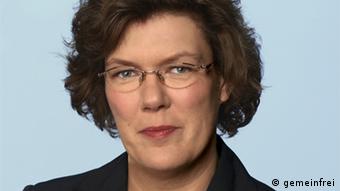
Social Democrat MEP Petra Kammerevert sees just one catch. Kroes' proposals could
threaten net neutrality.
Up until now, every user in Europe can use every possible Internet
service and website, regardless of how much data has to be transported.
But soon, the telecom companies could stagger their offers and make fast
access to certain services more expensive.
That could lead to some pages, such as Skype, being blocked altogether
because they disrupt the firm's business model. "I think that is the
first step to a two-tier Internet," warned Kammerevert. "That is not
what I would define as freedom of communication."
No roaming
Kammerevert fears for the EU's net neutrality
Kroes emphasizes that while she is very much in favor of net
neutrality, she says that companies must be able to profit for providing
a better service. At the same time, she wants to completely abolish
roaming charges for telephone calls and Internet use, making possible a
continent-wide flat-rate service.
Industry lobbyists in Brussels have already warned that this could raise
flat-rate prices, but Kroes believes that the telecom companies won't
make good on this threat because they will be able to make more money by
staggering Internet service prices.
Kammerevert thinks the commissioner will end up striking a deal with the
industry. "For me it sounds like this: we'll take away your roaming
charge privileges. In return, you get a qualitative staggering of
Internet access - a high performance network that is correspondingly
expensive. It leaves the impression of a package deal."
The EU Commission has long been offering the companies financial
incentives to invest in network infrastructure, fiberoptic cables, and
4G networks. Around one billion euros ($1.37 billion) of EU structural
funds is expected to be made available for this every year until 2020.
Not only that, the Internet is expected to be on the agenda again at
next week's summit of EU leaders.